What is Marketing Automation?
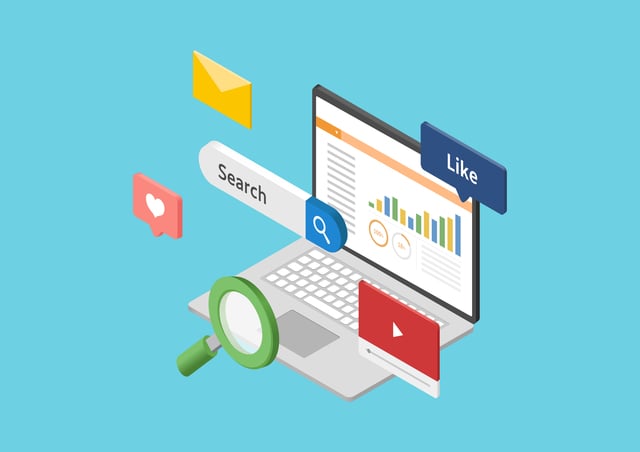
How does marketing automation work?
Marketing automation uses software to automate monotonous marketing work. Marketing departments can automate repetitive tasks such as email marketing, social media posting, and even ad campaigns - not just for the sake of efficiency, but also to provide a more personalized experience for their customers. The technology behind marketing automation makes these tasks faster and easier to do.
What can marketing automation do for your business?
When we look at the common challenges faced by businesses, we know that generating leads and keeping customers engaged throughout their journey remain top of mind. Along with these goals, businesses face an explosion of data being collected, but struggle to put it to use.
Marketing automation software can help overcome these challenges by putting data to work by streamlining our workflows.
Most businesses consider marketing automation a middle-of-the-funnel tool, ideal for nurturing leads through automated email sequences. And while email marketing is a great use for marketing automation, this approach can lead to a disjointed experience for prospects and customers as they move from marketing, to sales, to customer service.
Prospects are forced through an imaginary sales funnel with arbitrary touch-points and irrelevant content. Instead of reacting to individual customer needs, businesses serve up the same playbook on repeat.
However, automated marketing strategies should be deployed across the customer lifecycle. When marketing automation is thoughtfully integrated, it creates a fertile ground for healthy, long-term relationships with your customers. When done well, marketing automation delivers three main benefits to your business:
Personalized workflows
Each of your prospects’ actions is an added data point for your marketing strategy, telling you what customers are looking for, immediately in the moment. As helpful as this information is, manually tracking these behaviors is impossible. However, with marketing automation software, businesses can use these inputs across multiple channels to deeply understand their customers’ needs and deliver the right content at the right time.
These workflows help drive qualified prospects to helpful content, resulting in warm leads that can then be nurtured thoughtfully into customers. Marketing automation doesn’t stop there though. With the customer at the center of the flywheel, businesses can continue to engage customers with personalized workflows that lead to loyal, repeat customers who refer their friends and family.
Streamlined processes
Bring your whole company together with streamlined processes that keep your customers at the center of it all. Build processes that work across different functional teams so you can reduce customer effort at every stage of the journey. Break through silos and work together to provide a unified customer experience right from the very first touch, all the way beyond the customer purchase.
With effective marketing automation, there’s no need for complicated hand-off procedures, because everything is automatically saved in your central data storage, and internal workflows can help you prioritize tasks as they’re needed.
Build a best-in-class customer experience with your business
Build a process that helps you and your business run a more efficient and effective marketing machine.
How to get the most of marketing automation
At its best, marketing automation is a combination of software, strategy, and customer-centricity. It allows you to nurture prospects with highly personalized, useful content that helps convert prospects to delighted customers, and customers to loyal advocates.
To get the most out of marketing automation, businesses should weave automation throughout their business to break down silos and unite teams with processes that save time. Combined with the human touch, marketing automation can create a flywheel that keeps your business growing.
Start by focusing on the customer journey, rather than on the needs of your business. Identify potential touch-points that could benefit from marketing automation and build processes that ease the customer from touchpoint to touchpoint.
- Organize contacts using a CRM that integrates with your marketing automation software, so every action the customer takes is tracked as another data point.
- Use these data points to connect customers to the next step of their journey - whether that’s educational content, a salesperson, or a customer success check-in. The benefit of marketing automation is being able to use this white-glove approach with thousands of customers at a time.
A great marketing automation strategy gets your teams in sync by prioritizing tasks and making hand-offs a breeze. Contact records can be owned by the marketing team until the lead is warm and ready to be contacted by sales, at which point automation assigns and notifies the sales rep. When the customer purchases, customer success is notified, and can see all the past conversations and actions taken by the customer on their way to the sale. Not only is the process seamless and efficient, but it also builds a long-term relationship between the customer and the business.
Can you make marketing automation work?
Marketing automation is powerful, which also means to make it work, you must understand all its components and nuances. This page has compiled some of our top resources that will help you understand those nuances so you can make marketing automation work for your company.





How does marketing automation affect your customers?
Marketing automation isn’t just about what it can do for your business. It also pays off for your customers by solving common pain points that have arisen in the digital-first, omnichannel era. Your customers are overwhelmed with information, which makes it tough to find the answers they need. When they do manage to contact your company, they frequently have a disjointed experience as they move from team to team, across channels, and between platforms. Marketing automation can reduce this friction by connecting teams, gathering data in a usable format, and prioritizing behind-the-scenes tasks.
Surface more relevant content
With marketing automation, you can be specific about what each customer sees. From advertising to email marketing, use your buyer personas along with behavioral targeting to only send the information each prospect or customer needs. Customers are short of time - automation helps cut to the chase by using the data you’re already collecting to highlight the most pertinent content at the right time.
Provide better answers, faster
Marketing automation helps businesses prioritize tasks and manage leads, so incoming questions get answered quickly. Plus, with behavioral data stored in your CRM, front-line employees are empowered to provide more relevant help without the need to dig for information first. Understand your customers’ history and automate responses based on previous purchases, in-product actions, or lifetime value.
Offer seamless, omnichannel experiences
No one likes repeating themselves. And that’s why marketing automation is so great for customers. Data is collected, stored, and used in your marketing software so you can offer your customers a personalized experience like pre-filled forms, targeted emails that meet their needs, and customer service that feels as familiar as the store down the street. With automation, customers get the same experience no matter what channel they contact you on.
Start Growing With Marketing Automation
Get a demo to see how the marketing automation tools in HubSpot can help your business grow.

Frequently Asked Questions
-
Marketing automation is software that handles routine marketing tasks without the need for human action. Common marketing automation workflows include email marketing, behavioral targeting, lead prioritization, and personalized advertising. By automating these tasks, teams can work better together, provide more personalized, relevant content to prospects and customers, and save time.
-
Because often, there’s no top-of-the-funnel foundation put in place to support middle-of-the-funnel marketing automation. Marketers won’t have the ingredients they need for effective marketing automation until they have a steady flow of leads. Too many marketers without inbound lead generation strategies spend their time figuring out how to take the tiny fraction of the market they already have in their database, and squeeze more out of them. While they’re doing that, their competition is figuring out how to get more out of the 99.99% of the market that’s still out there.
Do you have all the existing leads needed to hit your revenue goals in your database already? Are you getting your fair share of the available market?
Even if your database is currently filled with quality leads, how effective will your marketing automation be when you’ve either converted all those leads into customers or when your database begins decaying by ~22.5%/year?
Understanding that a large database of leads is required for marketing automation to have any effect on their bottom line, many marketers end up buying lists of contacts to nurture with marketing automation. This spammy tactic produces incredibly low ROI. Along with the cost of buying these lists, sending unsolicited emails to people who have never requested any information from you leads to low engagement and hurts your IP address reputation, lowering your email deliverability rates.
Don't invest in marketing automation before you have fertile ground for nurturing campaigns to blossom. -
Traditional marketing automation often refers to triggering emails based on time delays or actions like email opens and email clicks. But is an email click alone enough data to execute a personalized lead nurturing strategy?
Marketing automation strategies that offer limited data like this to the marketer often result in bad marketing automation. You need context about who leads are and what they’re interested in to give prospects a good experience.
Marketing automation backed by an inbound strategy is centered around the prospect. Inbound marketing automation uses all the information we know about a person to inform the automation strategy, so we deliver the information they need to make a purchase, exactly when they need that information, in the place they’re looking for it.
Good marketing automation takes into account the evolving needs of your leads, and the behaviors and interactions they have with you across all of your marketing channels. Not just email. Using behavioral inputs from multiple channels such as social media, viewing a pricing page, or consuming a particular piece of content gives marketers the context they need to fully understand a lead’s challenges.
The most effective marketing automation also uses those various channels -- beyond email -- to communicate. That means the success of your campaign relies less on email, and fully utilizes the various channels that influence a buyer’s decision. -
If you’re publishing good content, generating a steady flow of new, organic leads, and you’re ready to scale your efforts, chances are it’s time to focus your efforts on a marketing automation strategy that will nurture quality leads into paying customers. Here are some good questions to ask yourself when deciding if marketing automation is the right move for your business:
- Are you generating a steady flow of new and qualified leads
- Has Marketing and Sales agreed on what conversations should happen with marketing and which with sales?
- Do you have a content strategy mapped to your buyer’s journey
- Are you tracking your leads’ digital body language across every touchpoint and marketing channel (not just email)?
- Do you have a proven lead nurturing strategy that you want to scale?
These are all good signs that marketing automation could work for your business. The key here is understanding that marketing automation does not do marketing for you, but can help scale your successful efforts.
-
When considering a marketing automation solution, don't focus on the individual features -- focus on the business results and the long-term partnership.
Here are some resources to help you make your strategic decision.
- Clouded in Confusion? How to Choose a Marketing Automation Provider (MyCustomer, November 2013)
- Marketing Automation Software Grid (G2Crowd)