Welcome! This blueprint will accelerate your lead management knowledge and expertise from 0-60 in no time at all. We've created this guide so that marketers at all expertise levels can learn all about lead management, including why it's necessary, what the important components and steps are, and how to select a software package that meets their needs.
Did you know that at least 50% of your leads aren't sales-ready after their first conversion on your website? Purchase decisions take time. In fact, research from Gleanster suggests that even when it comes to qualified leads, more than 50% of leads arent ready to buy on the day they first convert on your site. Youve put a lot of work into attracting leads, and how you manage them after the conversion will determine if that time was well spent.
It makes your sales team more efficient and effective.
Time is money, the saying goes. Walk into any active sales room and its easy to tell how time intensive most sales operations are. To make those hours spent worthwhile, its important to ensure that your sales team is only talking to the most qualified leads. Lead management helps you filter out the unqualified leads and better understand the buying cycle of your good leads.
It makes your marketing smarter and more cost-efficient
Inbound marketers put out a lot of content on a regular basis. But how do you understand which content helped move the needle for your sales team? Lead management enables you to identify which content and channels brought in your best, most qualified leads so you can focus your marketing activities and time on those.
It creates a better experience for prospects and leads.
In a lead management system, content delivered to leads is targeted and tailored to their interests. In addition, because lead management documents leads full history of interactions with your company, leads dont have to spend as much time educating your sales team about their interests. Sales and marketing are already aligned. The result is a much less fragmented experience for your leads.
About The Author of The Definitive Blueprint for Lead Management
By Meghan Keaney Anderson
As marketing manager for inbound marketing company HubSpot, Meghan is specializing in product definition and promotion. She came to HubSpot through the companys 2011 acquisition of Performable, a marketing automation and analytics start-up.
At Performable, Meghan championed the marketing efforts, working to build the performable brand and online presence.
Meghan also teaches writing for mass communication as an adjunct professor at Boston Universitys College of Communication.
You can follow Meghan on Twitter at @MeghKeaney
Back To Top
Lead management is a strategy and set of corresponding tools that help you in guiding your leads from their first interaction with your company to the point of purchase, and beyond. Most purchase decisions are made over time and after a great deal of research. Your leads typically conduct product research independently of your company and across many channels. Lead management, however, enables you to play a supporting role in that research and know when a lead has approached a decision point.
When done well, lead management makes your marketing team more effective and your sales team far more precise. In this chapter, we will cover the different components of successful lead management.
Lead management for B2B companies should actually begin before a lead ever fills out a form. Individual website visitors, who are still in the browsing stage, can actually tell you a great deal about what content is attracting them to your company. by using prospect tracking software, which reports on the IP address of site visitors, you can also associate anonymous visitors with the companies that host their computers.
Such intelligence can help you learn when prospects from ideal target companies are visiting your site and give you a sense of the content that drew them in. This information can inform and guide both your marketing and sales approaches.
The screenshot below is of HubSpots prospect tracking tool. As we already mentioned, through such a tool, you can see how many people from a given company have visited your site and what pages they collectively viewed. Tracking this data can help you determine which pieces of content to prioritize and what companies are likely to convert.

A prospect converts into a lead by providing your company with basic contact information and requesting information of some sort. Once this happens, a lead management strategy really kicks into gear.
Lead intelligence comes down to understanding what makes your leads tick. what challenges are they facing? what features or products are they interested in? It begins by developing a profile for your lead with the information provided and creating a place to store all future interactions and data on that lead.
The information that gets stored as part of this profile is what enables you to send more relevant, tailored communications that reflect your leads interests, rather than bombarding them with generic messages.
Information stored in this file also helps you better understand the quality of your leads so that your sales team can invest their time with only the most qualified buyers. Still not sure about all the benefits emerging from lead intelligence? Then keep reading to find out what valuable information you can extract from your website visitors.
Forms Completed: A completed form is the hand-raise of online interactions. Its a moment when your lead has reached a decision point: He wants to learn more. She needs more information. Hed like to talk to someone about pricing. pay close attention to the topics that have led to that decision point. If its a download, make note of the subject that has pulled their attention. If its a sales inquiry, how mature was the decision? Had the lead seen the pricing page yet? Had they requested information?
Pages Viewed: While less definitive than the completion of a form, your leads page-view history can tell you a lot about their interests and their readiness to buy.
Emails Read: Todays inboxes are flooded. The topic of the email that your lead chose to read, amid all his other messages and in the face of his bubbling-over inbox, tells you a lot about his interests and how important the subject matter is to him.
Social Media Interactions: Not every lead management system will be able to track social media interactions, but in an increasingly multi- channel world, its important to understand which leads of yours are active on social media.
The good news about inbound marketing is that it can attract high volumes of leads. The challenge then becomes, how do you separate the good, quality leads from the people who are just looking around?
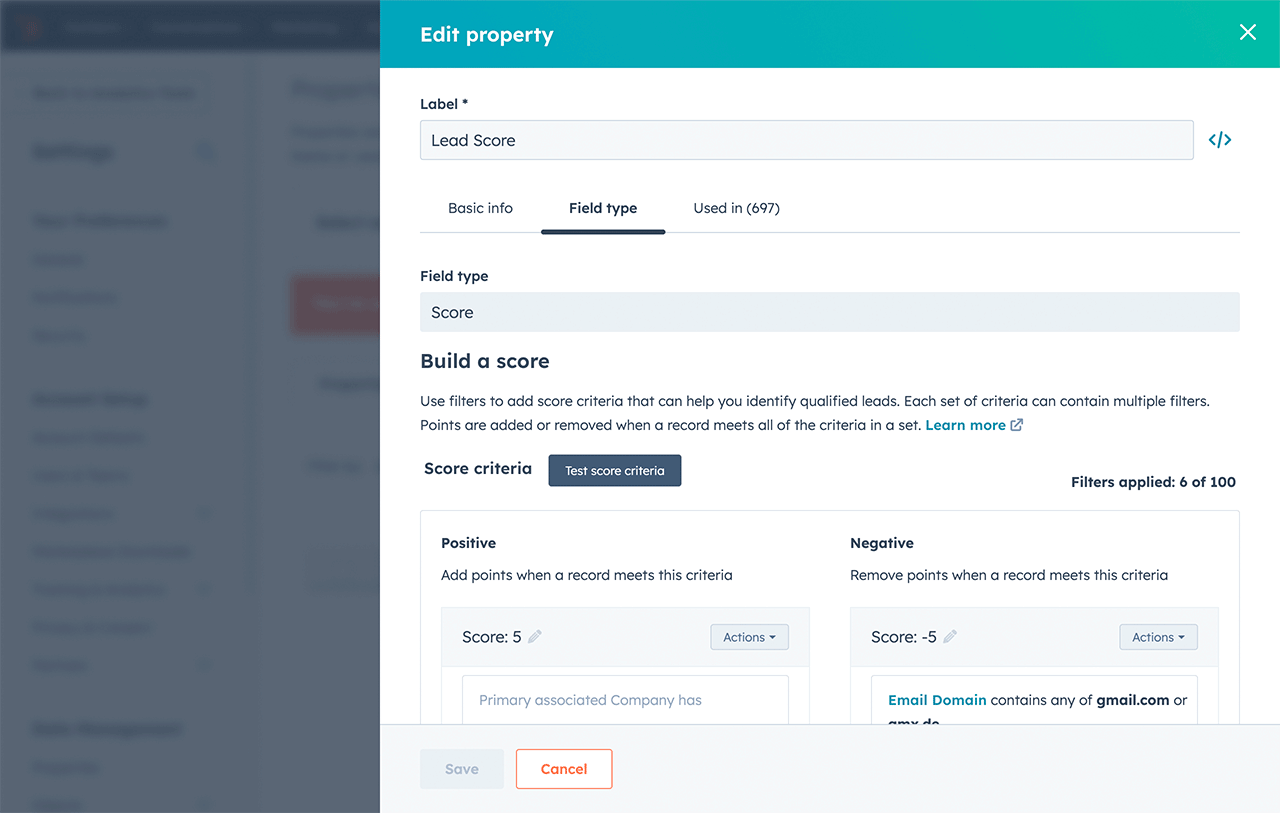
Thats where lead scoring comes in. With lead scoring you can attach values to each of your leads based on their professional information and the behavior theyve displayed on your website. For example, you would likely rank a Vice President level lead who has spent time on both your product and pricing page higher than an intern or coordinator level lead with the same behavior. You might also rank one VP over another if the first VP has demonstrated a higher level of engagement on your site.
Each of these scores go into a profile of your lead that helps you to determine when they are ready to talk with a sales person. The longer a quality lead spends with your content and the more informed he or she gets, the more likely theyd be interested in hearing from you. Lead scoring takes thought and knowledge of your business operations to set up, but once its set, it shouldnt take much day-to-day management.
Step One: Identify Your Ideal Lead
There are many criteria that you should use to help you determine what your ideal lead is. This is a partial list of criteria that you should definitely be using:
Qualifications from an Inquiry Form:
Job title
Company size
Company type
Activity Level:
Number of pages viewed
Number of forms completed
(Content downloaded or inquiries made)
Type of Interest:
Requested a demo or specific information
Viewed certain type of product
Top of the funnel interest (e.g. content) vs. middle of the funnel interest (e.g. pricing and packaging)
Step Two: Set Point Values
You can set any point value youd like, but typically you want to stick to a 0 to 100 scale and weigh the points in relation to how telling they are about a leads readiness to talk to sales and buy.
Lets say, for example, your ideal lead is a decision maker at a medium-to-large company (500 to 1500 employees). You have found in the past that before buying, leads have typically seen at least five pages of your website, viewed the pricing page, and downloaded some content. In other words, theyve done enough research to talk through a decision. You would weigh each of these qualifications or activities more heavily than others.
A company with 800 employees might get ten points, where as a company with 20 would get one, and a lead that lists student might get negative points. Same goes for someone who has downloaded multiple ebooks vs none.
Step Three: Determine What Score Makes Someone "Sales-Ready"
Remember, the point of lead scoring is two-fold:
Another key component of successful lead management is the integration of your marketing software and your customer relationship management (CRM) software. Why does this matter so much? Integrating the two systems will enable you to bridge the gap between marketing and sales strategy and achieve what many marketers refer to as closed-loop- reporting.
Closed loop reporting is a view of your entire marketing funnel, from the campaigns and channels that first brought prospects to your company to their most recent point of sale.
Achieving a closed loop view is important for marketers because it tells them which of their efforts resulted in customer acquisition, a critical metric to making future marketing investments. for sales it enables them to see a leads full history of interactions and interests before talking to them. This, in turn, significantly warms up the sales call.
Key Definitions:
CRM is a customer relationship management software. It manages a companys interactions with customers, clients and sales prospects.
An API (aka Application Programing Interface) is a documented interface that allows one software application to interact with another application.
Closed loop reporting is a view of your entire marketing funnel, from the campaigns and channels that first brought prospects to your company to their most recent point of sale.
Anatomy of a Lead Profile
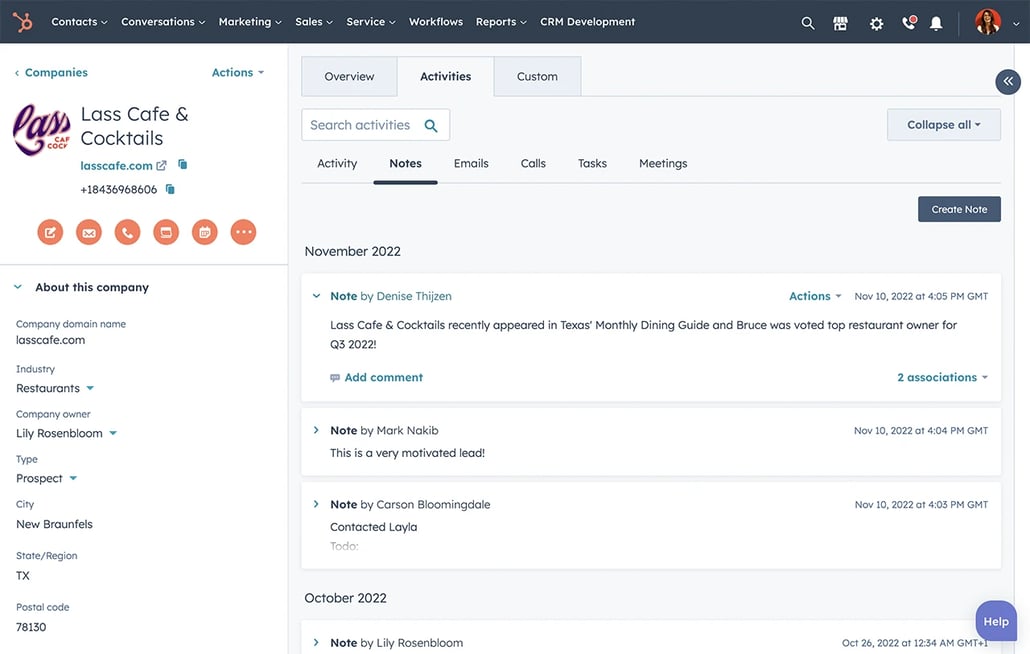
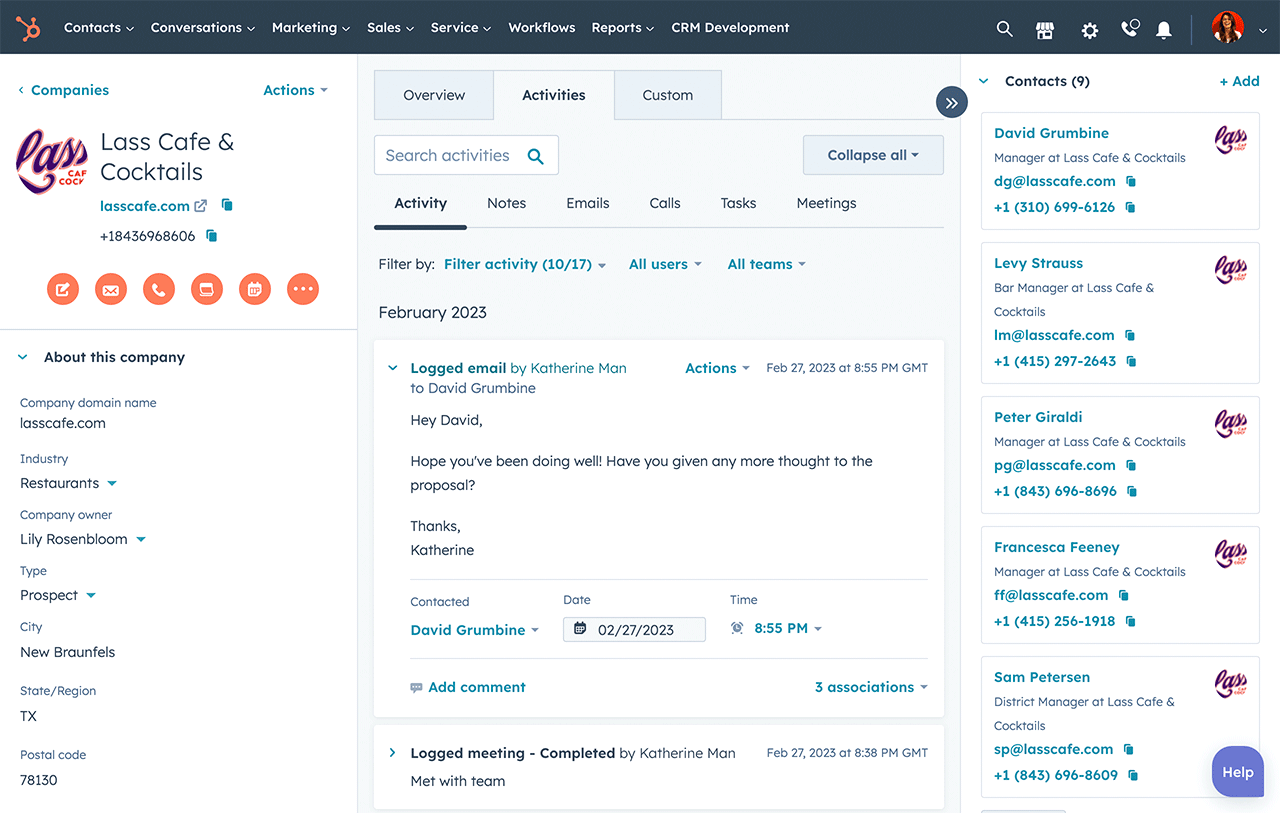
The screenshot below is of HubSpots lead intelligence tool and should give you a more concrete idea of what the information in a lead profile can look like. As mentioned earlier, lead intelligence includes data about a leads page views, downloads, emails and other interactions on your website.

As a lead management tactic, lead nurturing is all about understanding the nuances of your leads timing and needs. by getting these details right, you set yourself up for success.
Take a look at your lead intelligence, If it typically takes your leads a month to make a purchasing decision, then make sure youre spreading out your communications to keep them engaged throughout the month. by taking this approach, you also save your sales organization time by sending them only the most qualified, well-informed leads.
Relevance matters in a world of inbox overload. Thats why targeted lead nurturing emails tend to be more effective than typical email campaign.The average click through rate of a lead nurturing campaign email is 8%, compared with 3% for a standard email. weve even seen click through rates as high as 24% for some HubSpot customers. The best way to target your lead nurturing emails is to base the series closely on the initial download or inquiry that the lead made. If someone downloaded an ebook or other content offer, your lead nurturing series should provide additional information about that topic and not rush into pushing your product or service. The point of lead nurturing is to gradually educate the lead and address unanswered questions they may have before talking to your sales team.
Basic lead nurturing involves a tightly connected series of emails with a coherent purpose and an abundance of useful, relevant content
At a minimum, you should know why you have their email address. Did they convert on an ebook A or webinar B? Did they put their business card in your fish bowl at conference C? Make sure your nurturing campaign is related to this initial topic that drew them to you.
You might have made educated guesses about which types of content your subscribers will be interested in, but you can also check if your approach was effective. Monitor clicks and see what content pieces resonate better with your recipients. This will allow you to improve your lead nurturing campaigns.
Update your emails as things change. Your industry isnt static, your offers arent static, and your lead nurturing shouldnt be static either. Make sure you update your lead nurturing campaigns on a regular basis to keep them relevant and interesting.

Tip: Start With Educational Content
One of the best ways to warm a lead up is to help them learn more about your company through content designed to educate rather than sell. on the next page you will find the first email in HubSpots SEO-related lead nurturing campaign. This message gets sent to any lead that converts on an offer associated with search engine optimization. The email seeks to be useful and engaging without being sales-oriented. We consider it a successful example of a lead nurturing email because it has resulted in a 18.61% CTR.
We have incorporated industry best practices in designing this email. For instance, we have:
A Clear Branding Element
Social Media Sharing and Following Links
One Strong Call To Action
A Personal Signature
Here is a screenshot of the first email in HubSpots SEO-related lead nurturing campaign. Can you spot all the industry best practices we mentioned on the previous page?

"It extends beyond the form- completion triggers of basic lead nurturing to encompass page views and other online interactions.""
Often called marketing automation, behavior-based lead nurturing enables a company to automatically trigger an email, alert or other communication based on real-time customer behavior. This behavior extends beyond the form-completion triggers of basic lead nurturing to encompass page views and other online interactions with your company both on and off your website.
The goal of behavior-based lead nurturing is to respond to leads and customers as their needs arise and change. The characteristics of a behavior-based lead nurturing system include:
Customer-Determined Timing
In a basic lead nurturing program, your marketing team determines the cadence and schedule of your email drips. In a behavior-based program, email sends are dependent on the lead and his or her completion of certain actions.
Segmentation Based On Behavior
Rather than segmenting your audience by title or company size, behavior- based automation groups recipients by their interests, as determined by the content they view and the actions they take. You can create segments of highly engaged leads, leads interested in topic X, leads with high social media activity, and so on.
Multichannel
The other big difference between basic and behavior-driven lead nurturing programs is that some behavior-driven tools, like HubSpot, can bring in related lead activity from social media. So not only can you email someone when they download an ebook, if youd like you can thank them for mentioning it on twitter, or alert your sales team.
Triggers on Positive and Negative Interactions
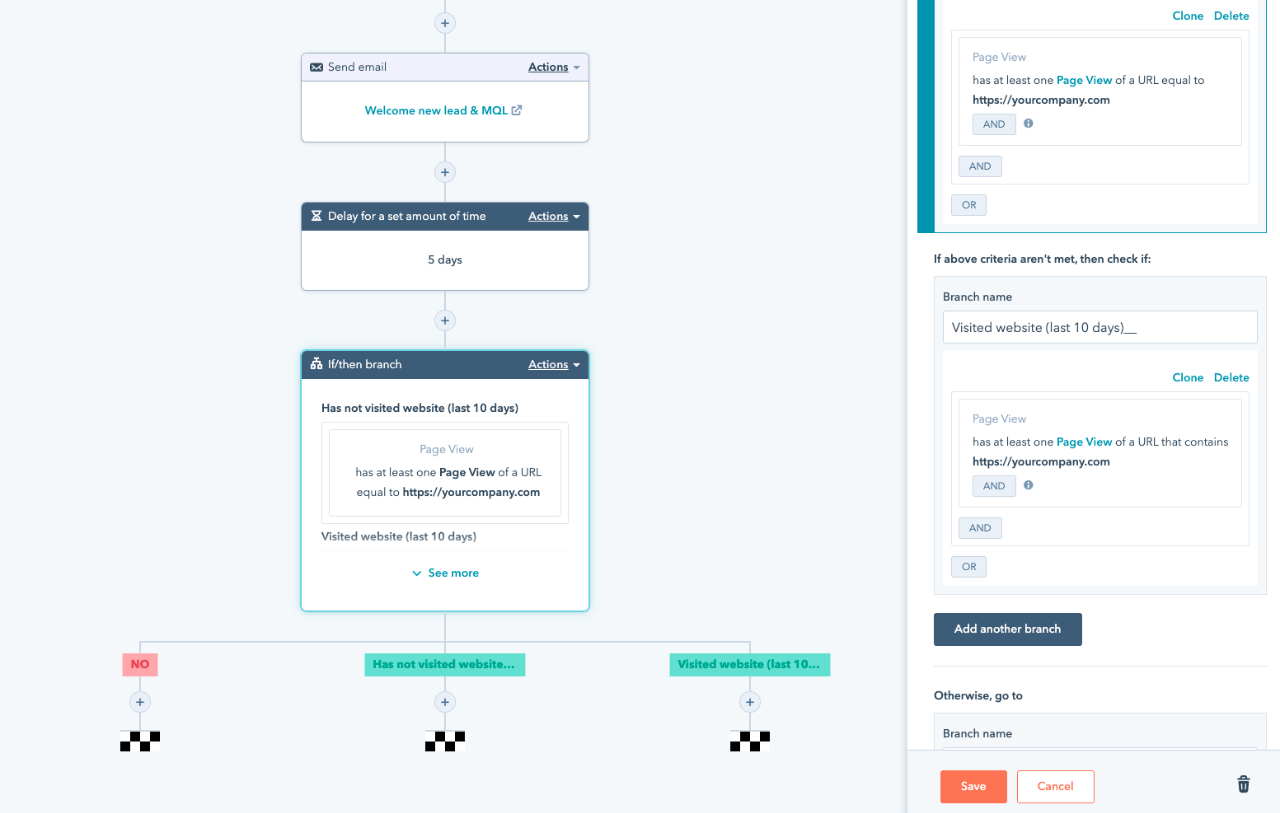
Finally, unlike basic lead nurturing, behavior-based lead nurturing or marketing automation can also trigger emails based on actions that a lead didnt take. for example, if a lead downloaded your ebook and viewed your pricing page but has NOT yet requested a demo.

"Whether youre starting a basic or a behavior-based lead nurturing campaign, you need to figure out which tools youre going to use."
Whether youre starting a basic or a behavior-based lead nurturing campaign, you need to figure out which tools youre going to use. That means choosing the software that will run your campaign, the software that will define the contacts you want to send to, the emails you want to send, and the events that you want to trigger those emails.
At HubSpot, we use our own HubSpot lead nurturing software. HubSpot lead nurturing software is a core part of all of our inbound marketing software packages, making it an easy and powerful option.
When youre choosing lead nurturing software thats right for you, make sure you ask these questions:
Is the tool easy to setup and manage? (can I run it myself, or do I need to hire a consultant?)
Does the software help you grow your contact list? or is it just resending emails to the same increasingly stale list?
Does the software integrate easily into the rest of your inbound marketing software? Your website? Your blogging software? Your landing pages? Your social media? Your SEO tools?

"There are certain steps you need to follow in order to ensure the efficiency of your emails."
You probably already have some ideas about lead nurturing campaigns that you can launch to shorten the sales cycle of your leads and boost conversions. So how do you get started?
Setting up a lead nurturing campaign is not a science. However, there are certain steps you need to follow in order to ensure the efficiency of your emails. For instance, you shouldnt be pummeling recipients with sales pitches. Instead, you should start out by sending useful, low- commitment information with content-based calls- to-action. gradually, you will introduce a middle- of-the-funnel call-to-action that is tightly related to your initial point of contact.
In this section, we will review the step-by-step process of setting up a lead nurturing campaign and highlight some best practices along the way.
The first step is to determine your goal, which will direct your entire campaign: audience, content, and success metrics.
Are you trying to reawaken cold leads? Increase lead quality? Generate new leads?
Before you set the goal of your lead nurturing campaign, you should decide what actions make a lead sales-ready. For example, if someone downloads a whitepaper, they could just be doing research and may not be ready to speak with a sales rep. Therefore, you should add them to a lead nurturing campaign that further qualifies them. If that person comes back and requests a demo, thats a much better indication that they are ready to buy. Now you can send them to a sales rep.
The second step is to decide who you are trying to reach.
What problem are you helping them solve?
This is key for helping you create the content for your lead nurturing campaign. Your persona should be a pretty vivid picture of who youre ideally trying to reach. go as far as giving them a name, a job, responsibilities, and hobbies. If you havent created your buyer persona yet, follow the steps outlined in this blog post.
Now that youve decided what makes a person sales-ready, you can choose which content you should send to your fresh leads. As you might have figured by now, content is a key piece of lead nurturing. Just because someone converts on your website, doesnt mean you should jump straight into sending them an email about requesting a quote or a demo. You need to nurture them through the sales funnel first to make them readier to buy.
Instead Of Pitching Your Product As The Greatest Thing Ever, You Should First Offer Value.
Examples of valuable offers include videos, webinars, ebooks, blog posts, and whitepapers. You dont have to create new content for your lead nurturing emails. If you have a backlog of content, utilize those assets. If theyve been successful at converting leads in the past, theres a high chance the leads youre nurturing now will find value in them, too.
Your business has a typical sales cycle, and so should your lead nurturing campaigns. Typically, its a good idea to send two to three emails to your prospects in a lead nurturing campaign.
75% Of Leads Buy Within 18-24 Months
This means you might want to space out your emails monthly. with lead nurturing, patience is a virtue. Its important to remember not to rush into the sale. Instead, let it take its natural course.
Dont be afraid to experiment with different times and see what resonates with your audience best. For example, if your typical cycle runs 30 days, you may want to set up a campaign for emails to be sent out on the 1st, 10th, and 20th days after a conversion. (Source: MarketingSherpa)
The last step in setting up a lead nurturing campaign is to ensure the accurate tracking of your emails. You need to make sure you know whats working and whats not so you can continue to improve.
Have Metrics In Place That Tie To Your Goals Set In Step One
Looking to drive branding and awareness? Measure branded search or direct traffic to your website. Looking to increase lead quality? Measure quality conversions or lead ratings over time. Interested in generating new leads or email opt-ins? Measure how youre growing your database from your lead nurturing efforts.
As your campaigns run, make sure to experiment with the offers you send, the subject lines, and the calls-to-action found within the email. Theres always room to improve your campaign.
Lead Nurturing Helps A Staffing Agency Get 'Ready To Buy' Leads
"If we didn't have lead nurturing I think we'd miss out on a lot of great opportunities. People need a lot of information before they're ready to commit." - Rebecca McNeil, Aclipse Marketing Director

"Doing lead management right requires the right mix of skill and technology."
Lead management should be the common thread that runs through your marketing and sales program. Done correctly, lead management not only speeds up your sales process by helping move leads through your marketing funnel, but it also makes their experience less fragmented and more reflective of their interests and timeline. To that end, look for a lead management system that is fully integrated into all of your other marketing tools, from your top-of-the-funnel lead generation activities to your marketing analytics and CRM systems.
Remember, technology is only part of the picture. even with the best lead management software systems, getting the experience right for your leads and customers requires the right mix of skill and technology. Before taking on the expense of a software system, make sure that it works with your overall marketing strategy, particularly when it comes to educating and nurturing leads over time. without a clear lead management strategy, your technology may under perform.
Ensure that Lead Import is a possibility
Not all leads come from online inquiries. Trade shows, tweet-ups and other in-person events still play a role in connecting leads to your sales teams. even though most lead management systems are based around online interactions, you should be able to import leads into your lead management system from off-line events and other sources.
In fact, leads that come in through in-person events may have different needs and contact preferences than those who convert online. Make sure your lead management program enables you to differentiate and target to these leads as necessary. Make sure you know how to tag and measure these leads appropriately.
Is the system flexible to different types of leads?
Leads come into your company through a number of different sources. Its important that your lead management software enables you to input and nurture all of your leads, whether they came in through a cold-call, an ebook or an in person event.
How does it lead to better sales and marketing alignment?
According to a 2010 Aberdeen group report, organizations in which marketing and sales data are closely aligned perform significantly better than their counterparts. In fact, companies that saw close alignment between marketing and sales thanks to lead management saw annual revenue increases of 47% compared to a 4% decrease in companies with less alignment.
Ask your potential provider how their lead management software bridges the gap between marketing and sales data and if lead profiles are maintained over the course of the customer lifecycle.
Can I customize the lead score?
What determines a quality conversion for your company may be wildly different from a quality conversion at another company. Make sure youre able to customize your scores to your sales and marketing goals.
When prospects convert to leads, do their histories transfer over with them?
Prospect tracking and intelligence are most useful when the data associated with them can remain with the individuals profile after they convert into a lead. In that way, you get a complete understanding of your leads experience. Not all prospect tracking software attaches prospect data to lead profiles, so be certain that yours does.
Is the lead nurturing form-based or behavior-based?
Conversions on website forms tell you only part of the story about what drives your leads. Pages viewed, emails opened, and other interactions give you a more comprehensive understanding of that story. Make sure that your lead nurturing or marketing automation tool can trigger communications on a spectrum of interactions with your potential customers. This goes for off-site interactions as well. For example, would it be useful to trigger alerts when a lead mentions you or a competitor on Twitter? What about a current customer who requests help via your third-party helpdesk? These interactions should factor in as well.
As a final note, its important to ready your staff to implement a lead management program. getting lead management tools is one step in the process, but making sure your team is prepared to get value out of them is just as critical.
Align Sales and Marketing
Bring your sales and marketing teams together to agree upon your ideal lead and set lead scoring criteria.
Spend Time With Your Analytics
What do you know about your leads behavior already? Take a look at your existing analytics and try to find behavioral trends and segments.
Prioritize Quality Content
Even with the best technology, the lead management programs that fail are those that use lead nurturing tools to send out poor quality content. Make sure your communications are relevant, useful, and personalized to the recipient.
Back To Top

This Blueprint is Introductory.
Introductory content is for marketers who are new to the subject. This content typically includes step-by-step instructions on how to get started with this aspect of inbound marketing and learn its fundamentals. After reading it, you will be able to execute basic marketing tactics related to the topic.