Logo - Full (Color)

Sales Automation Tools

Automate lead rotation, create tasks, and streamline prospect follow-up with sequences and workflows.

  • Scale personalized sequences with AI-powered timing and content

  • Use workflows that achieve higher close rates by rotating leads and automating tasks

  • Save time with conversation intelligence and A/B testing that drives results

Automate your follow-up and put time back into your day.

Sales reps have a lot on their plate. Wasting time with repetitive tasks can lead to inefficiency, frustration, and even lost sales. Save time and prevent prospects from slipping through the cracks with HubSpot's sales automation tools.

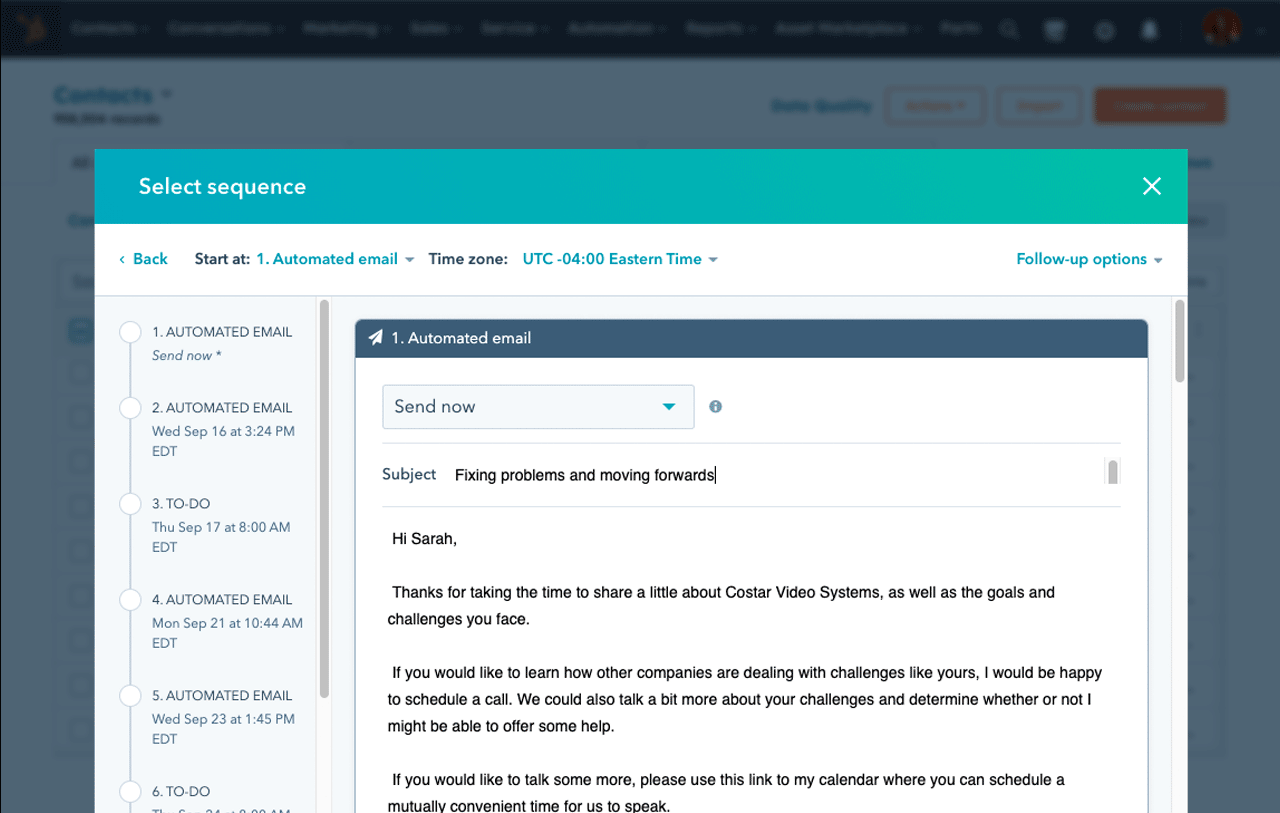
Create a sequence of timed personalized emails and engagement, and use workflows to enroll prospects based on intent signals. Choose from a list of email templates and task options, and enroll a contact right from your HubSpot inbox.


  1. Personalize your automated sales emails.

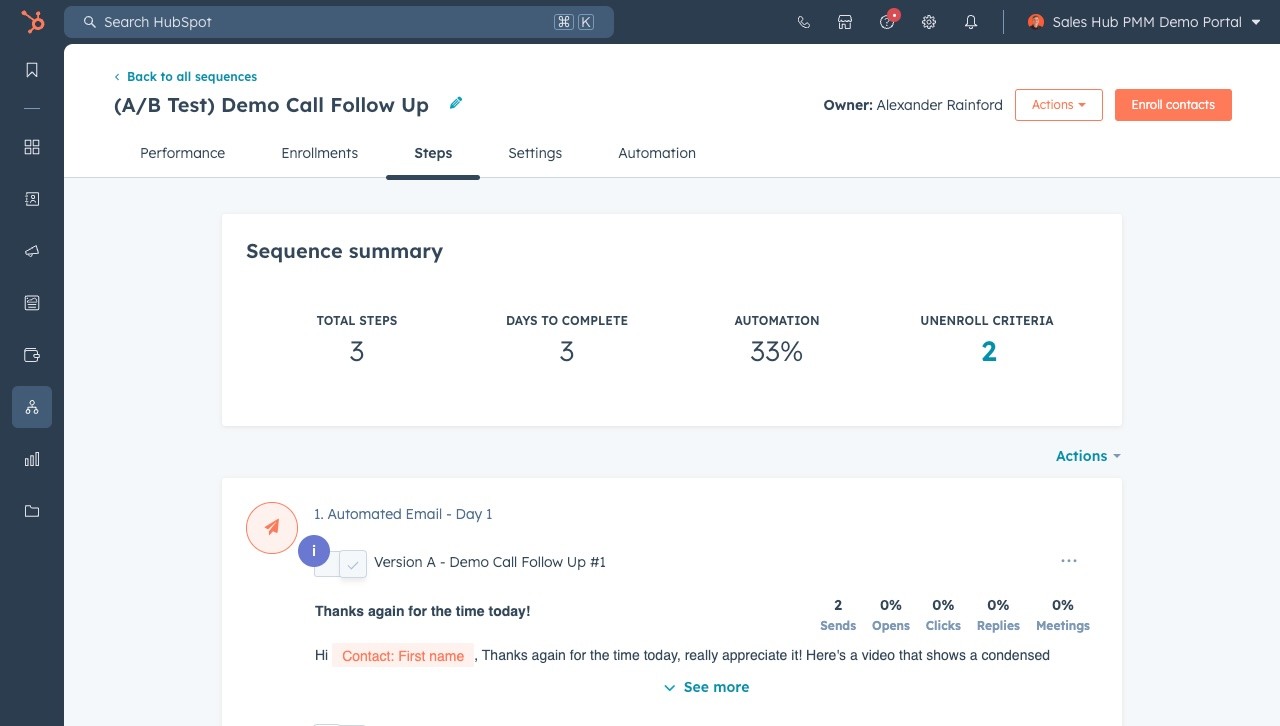
    Save your sales emails from becoming impersonal. Personalize your messages and create valuable human connections with your prospects. Boost engagement by tailoring your outreach with data from HubSpot Smart CRM, and leverage dynamic sequences that automatically adapt based on prospect engagement.
  2. Streamline your sales process with workflows.

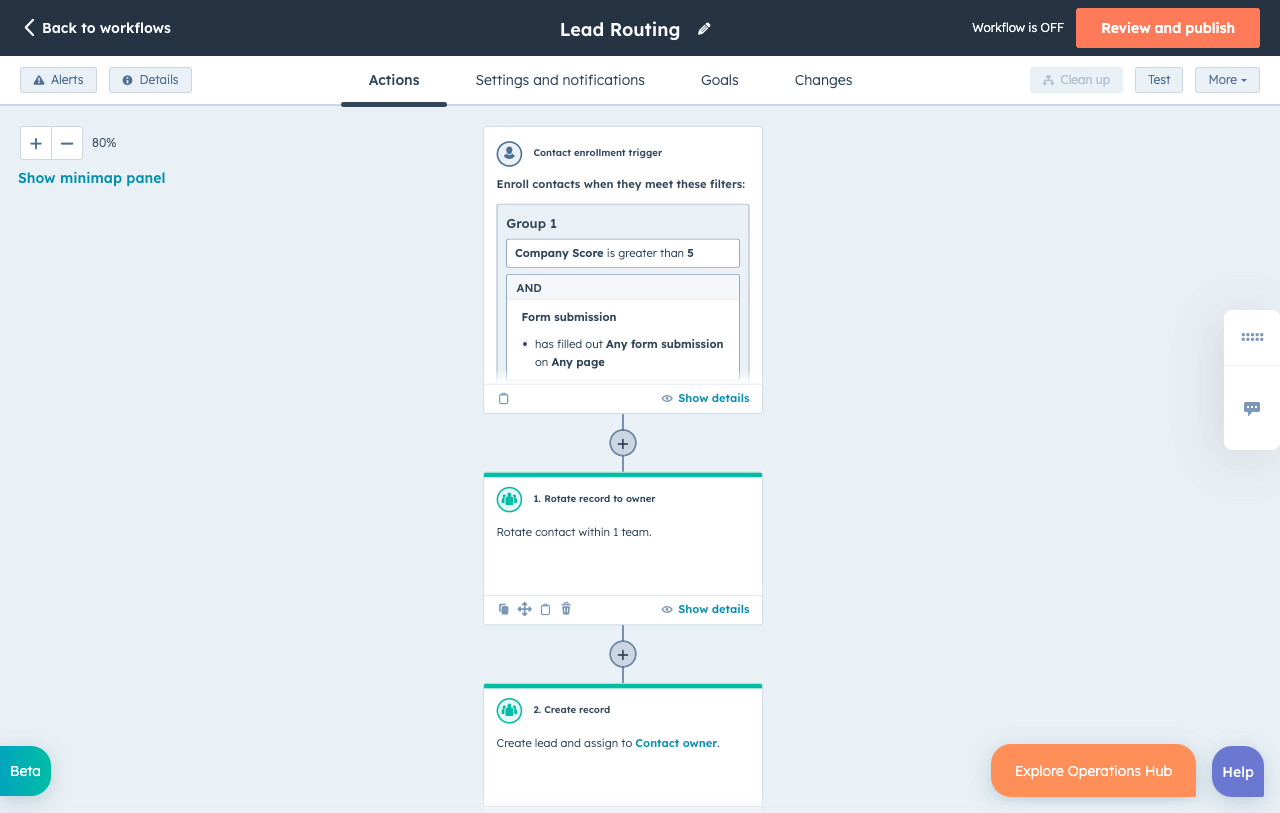
    Use workflows to rotate leads, create deals, and automate tasks. Manage your data in bulk by updating properties, copying values, and more. Trigger notifications for your team when a contact takes meaningful action. Easily add tasks to alert your sales team about contacts they should follow up with.
  3. Unlock the science of prospecting.

    Test, observe, and measure the impact of your sequences at every step. Run A/B tests on your sequence sales emails to optimize your messaging and maximize your outreach strategy with deal outcome reports to uncover what sequences generate the most revenue.
  4. Connect with the apps your team already uses.

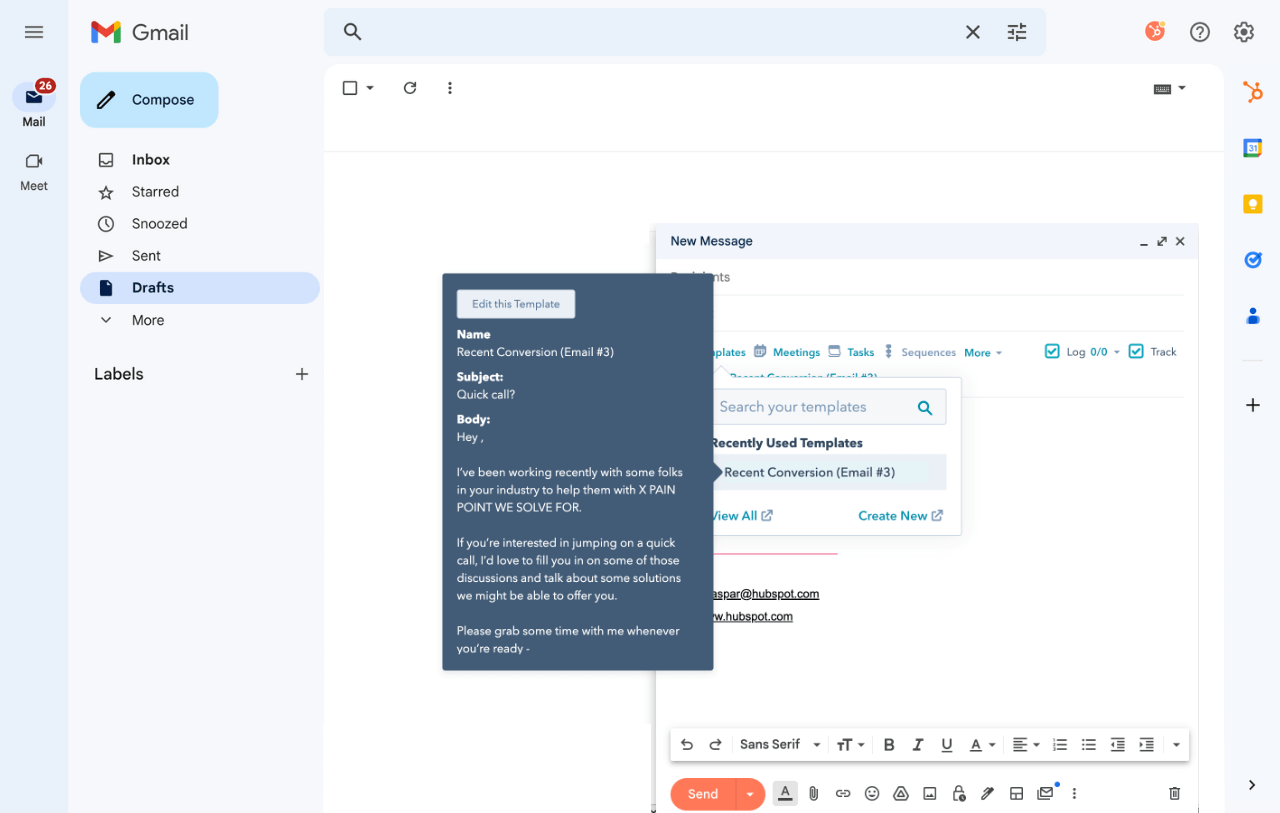
    You don't need to waste time training your team on new sales software. HubSpot’s sales automation tools work seamlessly with Gmail, Google Workspace, Outlook, and Office 365 for Windows. Enroll contacts in sequences right from Gmail or Outlook for desktop so you never lose touch.

Have questions? Give us a call and we'll walk you through it.

+1 857-829-5060

Thanks to sales automation, my follow-up process has become incredibly efficient. HubSpot has revolutionized my everyday sales routine, making it easier to achieve my goals.

Giorgos Pantelatos

Sales Representative, EMEA (Greece)

Copysystem SA

Frequently Asked Questions

Get answers to common questions about HubSpot's sales automation software.

Sales automation software streamlines repetitive sales tasks through technology, from email sequences to deal management. According to HubSpot's 2025 ROI report, the platform helps teams see significant results: customers generate 3x more inbound leads after 6 months. The unified platform automates workflows and reduces manual work.

Sales automation transforms productivity, with 73% of HubSpot sales pros reporting improved win rates (source). Other key benefits include faster deal closures, more leads through automated sequences, and revenue increases by eliminating manual tasks.

The fastest starting point for most teams is automating two things: follow-up sequences and lead routing. Set up a sequence of 3–5 timed emails for new leads, and create a workflow that assigns incoming leads to the right rep based on territory, company size, or source. Both can be configured in HubSpot.

HubSpot's sales automation tools are available for free, with advanced workflow logic, branching sequences, and AI features in Starter, Professional, and Enterprise editions of Sales Hub.


Common sales tasks that can be automated include: lead rotation and assignment, email follow-up sequences, meeting scheduling, deal stage transitions, CRM data updates (logging calls, emails, and meetings), task creation, lead scoring, and pipeline reporting.

The highest-impact starting points for most teams are follow-up sequences and lead routing — the two areas where manual processes most often cause deals to slip through the cracks.

Marketing automation handles top-of-funnel activities: email campaigns, lead capture, social scheduling, and nurturing sequences before a lead is sales-ready. Sales automation takes over once a lead enters the pipeline — managing follow-up sequences, deal stage transitions, task creation, and rep activity logging. The two work best when connected on a shared CRM, so handoffs between marketing and sales happen without data loss or duplicated outreach.

A CRM stores and organizes customer data — contact records, deal history, communication logs. Sales automation adds a rules engine on top of that data: when a deal moves to a new stage, automatically create a follow-up task. When a prospect opens an email three times, alert the assigned rep. When a lead hits a score threshold, route it to the right rep automatically. Most modern CRMs, including HubSpot, embed sales automation directly — so you're not managing two separate systems.

AI adds a predictive and adaptive layer on top of rule-based automation. Where traditional automation triggers actions based on fixed rules ("if stage = proposal, create task"), AI-powered automation surfaces which deals are most likely to close, recommends the optimal send time for outreach, scores leads based on behavioral patterns, and adapts email sequences based on how prospects engage.

HubSpot customers using AI sales features see a 48% decrease in average time to close. (Source: HubSpot’s 2025 ROI Report)